- Written by Dr Mini Nair, Senior Consultant at UWAY Health
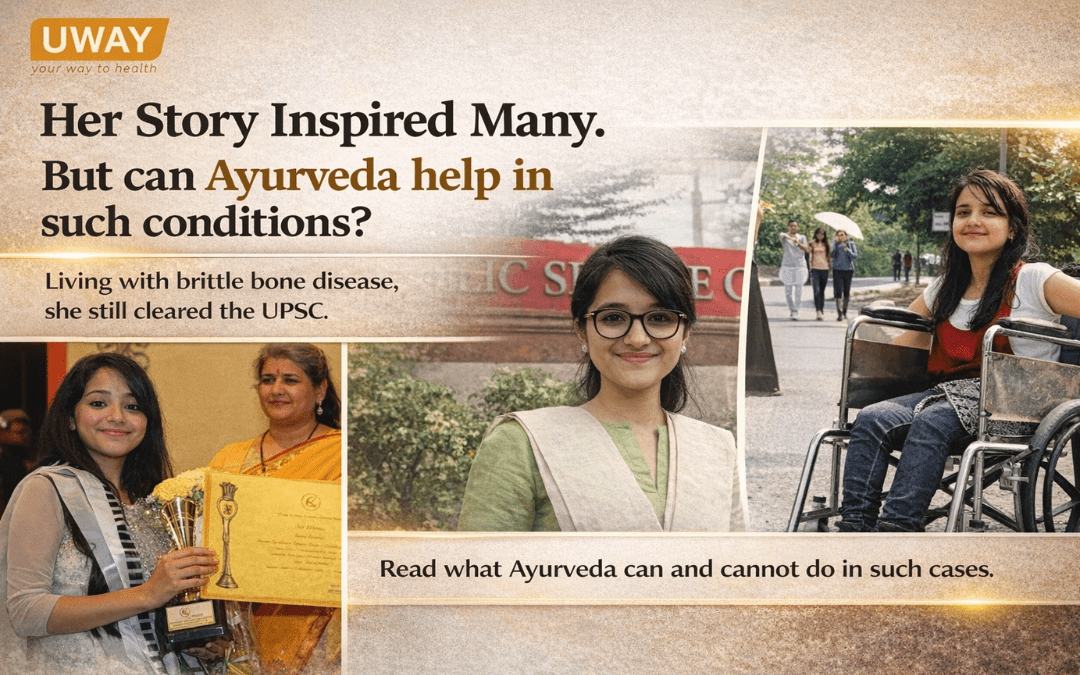
Many of you may have read the story of Ummul Kher recently. She went through repeated fractures, multiple surgeries, very difficult personal circumstances, and still went on to clear the UPSC examination. Naturally, most people noticed her determination and what she achieved in life.
In case you have not read the full story, this is the broad context. She was living with what is commonly called brittle bone disease. In this condition, the bones can break very easily, sometimes even with very little force. Even with pain, limitations, and repeated setbacks, she kept moving ahead.
The reason for writing this article is not only because her story is inspiring. It is also because the condition behind such stories needs better understanding.
When people hear the term brittle bone disease, many think it simply means weak bones. But medically, it is more specific than that. In most cases, this term refers to osteogenesis imperfecta, or OI. This is a rare genetic disorder in which the body forms collagen abnormally, which makes the bones unusually fragile.
Let me say one thing clearly at the beginning. Ayurveda does not offer a cure for osteogenesis imperfecta. In fact, even modern medicine does not claim a definitive cure. Current treatment focuses on reducing fractures, improving mobility, supporting muscle strength, and helping the person become as independent as possible.
That said, this does not mean Ayurveda has no place at all. The real question is not whether Ayurveda can cure a genetic disease. The more useful question is whether Ayurveda can support the person living with it in a meaningful way.
What exactly is brittle bone disease?
Osteogenesis imperfecta is not just about fractures. Depending on the type and severity, the person may also have short stature, bone deformity, dental problems, hearing issues, spinal curvature, and difficulty with mobility.
So when we speak about brittle bone disease, we are not speaking only about a bone that breaks. We are also speaking about a life that can get interrupted again and again.
A child may stop playing freely.
A parent may start living in constant fear.
An adult may think twice before doing simple things.
A family may begin arranging daily life around caution.
That is why this condition has to be understood not only medically, but also practically and emotionally.
Not every fragile bone condition is the same
This part is important, because many readers may confuse OI with other bone conditions.
OI is rare, but bone fragility itself is not rare. Doctors commonly see other conditions which can also lead to weak bones or repeated fractures.
Why does this distinction matter? Because the cause is different, and when the cause is different, the treatment approach also changes. A person with osteoporosis is not dealing with the same underlying problem as a child born with osteogenesis imperfecta. A person with osteomalacia may improve significantly when the deficiency is corrected. OI, however, is a genetic collagen disorder. That changes the whole conversation.
So if someone has repeated fractures, especially from a young age, it is important not to casually assume it is just weakness or calcium deficiency. Proper diagnosis matters.
Why do families come to Ayurveda in such conditions?
In chronic disorders, especially those without a complete cure, people often come to Ayurveda after they have already seen many doctors and tried many treatments. Usually, they are not coming because they believe a genetic condition will disappear with one medicine or one course of treatment.
How do we support recovery after every setback?
How do we maintain nourishment?
How do we improve digestion when movement is reduced?
How do we help with sleep?
How do we bring some steadiness into daily life?
How do we help the child or adult feel less fragile, less anxious, and less dependent?
This is where Ayurveda enters the conversation in a realistic way.
Not as a cure.
Not as a substitute for orthopaedic care.
But as a supportive system of care.
That distinction is very important.
Brittle bone disease in children
When the patient is a child, the burden is often much larger than what appears on the scan or X-ray.
Repeated fractures can disturb play, school attendance, sleep, movement, confidence, and normal physical development. Parents naturally become very protective. Every fall becomes a matter of concern. Every complaint of pain feels serious. A simple activity that other children do easily may become a source of hesitation.
From the modern medicine side, the priorities are clear: diagnosis, fracture management, physiotherapy, occupational support, mobility assistance, orthopaedic monitoring, and in selected cases, medicines that may help improve bone density or reduce complications.
Where can Ayurveda fit in?
Ayurveda should never delay diagnosis. If a child has repeated fractures, proper medical evaluation is essential.
But once the diagnosis is established and appropriate treatment is going on, Ayurveda may still support the child and family in other practical areas. This may include improving appetite, helping digestion, maintaining nourishment, supporting bowel regularity when the child is less active, improving sleep rhythm, and helping the family build a calmer and more sustainable daily routine.
In children, even small improvements in recovery and routine can make a difference at home. Parents feel less helpless. The child feels more supported. Daily life becomes a little easier to manage.
Brittle bone disease in grown-ups
Adults living with OI often face a different kind of burden.
Sometimes fractures may become less frequent than in childhood. But the long-term effects remain. There may be chronic pain, reduced stamina, deformity, difficulty with mobility, hearing problems, fear of falls, work limitations, and the emotional strain of living with a body that feels unpredictable.
This is often the stage where the question changes.
It is no longer only, “How do I treat this disease?”
It becomes, “How do I live better with this condition?”
That is an important shift.
Because when cure is not possible, quality of life becomes central. A grown-up living with chronic bone fragility often wants help with energy, digestion, sleep, pain comfort, recovery after immobility, emotional steadiness, and creating a daily rhythm that feels sustainable.
This is where Ayurveda may offer support sensibly. Again, not by claiming to correct the gene problem, but by helping support the person’s day-to-day functioning and resilience.
At what stages can Ayurveda help?
In my view, this is the most useful way to discuss Ayurveda in brittle bone disease.
1. When symptoms are first noticed
At this stage, Ayurveda’s direct role is limited. Repeated fractures should be treated as a serious medical sign. Proper diagnosis should not be delayed.
2. After diagnosis is confirmed
This is often when families begin asking daily-life questions. Ayurveda may help with routine, diet discipline, digestion, sleep, and supportive lifestyle advice.
3. During fracture-prone periods
This phase can be physically and mentally exhausting, especially in children. Supportive care may help with appetite, bowel regularity, rest, and general steadiness during a difficult time.
4. During recovery after fracture or surgery
This is one of the most practical stages for Ayurveda support. Reduced movement often affects digestion, sleep, appetite, and mood. A structured supportive plan may help the person recover better overall.
5. During stable periods between major events
This may actually be the stage where Ayurveda is most useful. The focus can shift to better routine, steady nourishment, improved rest, and sustainable daily habits.
6. In long-term adult living with the condition
For adults, Ayurveda may help create a more stable personal framework around a chronic condition that otherwise keeps disrupting life.
So the right question is not, “Can Ayurveda cure brittle bone disease?”
The better question is, “At what stage can Ayurveda support the person, and in what way?”
What are the real challenges in this disease?
The biggest challenge is not only fracture.
It is repetition.
Repeated fractures.
Repeated recovery.
Repeated fear.
Repeated interruption.
A child may become fearful of movement.
A parent may become overprotective.
An adult may slowly withdraw from activity.
Confidence may reduce over time.
And there is also uncertainty. Families are not only asking for the name of the disease. They are also asking what life will look like in the years ahead. Can the child go to school regularly? Can adulthood be independent? Can work be managed? What happens after the next fracture? What kind of future is possible?
These are deeply human questions. Bone density alone does not answer them.
That is why supportive systems of care matter.
New medicines are being explored, but the need is still there
Newer medicines like setrusumab, teriparatide, and denosumab are being studied for osteogenesis imperfecta. Some have shown encouraging improvement in bone density, but they are not a cure, and recent phase 3 results for setrusumab did not show the expected reduction in fracture rates.
This means treatment is improving, but major unmet need still remains.
And that is exactly why supportive care continues to matter.
So where does Ayurveda stand?
The honest answer is this:
Ayurveda does not cure osteogenesis imperfecta.
It does not replace fracture care.
It does not replace specialist treatment.
It should not delay diagnosis.
But that does not mean it has no value.
Used thoughtfully, and under expert guidance, Ayurveda may support the person living with this condition in areas such as:
- digestion
- nourishment
- sleep
- bowel regularity during reduced movement
- recovery support
- daily routine
- steadiness in long-term living
For a lifelong disorder, even this kind of support can matter greatly.
When families approach Ayurveda doctors in conditions like brittle bone disease, they are often asking
What more can we do so that life becomes a little easier, a little steadier, and a little better supported?
That is the space where Ayurveda may still have a meaningful role.
Not as a cure.
But as support.
And in many long-term conditions, support itself is not a small thing.
Wishing you warmth, ease, and happy digestion.
—Anna
www.healthwithanna.com
About Author
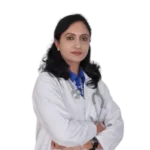
Dr. Mini Nair is an experienced Ayurveda doctor with more than 28+ years of clinical experience. She has dedicated her career to identifying and treating the root causes of diseases using the principles of Ayurveda and Siddha, two of India’s oldest systems of natural healing.