
- Written by Dr. Latha V, Senior Consultant & Founding member UWAY Medical Team
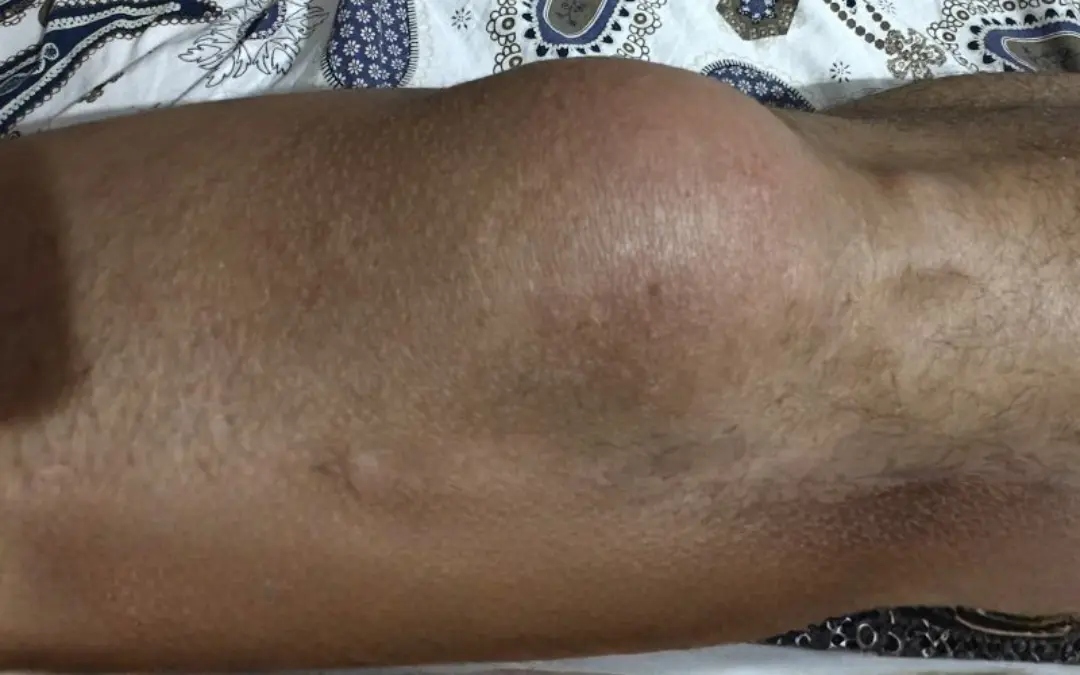
One of my patients shared this image with me.
If you see the image you can imagine the significant discomfort.
The knee was swollen very badly
What concerned him most was despite taking Etoricoxib 90 mg, the pain did not settle, and he eventually required an injection for relief.
If you have experienced a gout attack, you will understand how severe these episodes can be.
Let me first clarify a common doubt.
Gout is not an autoimmune disease. It is a metabolic inflammatory arthritis.
In simple terms, the sequence usually looks like this:
Protein → Purines → Uric Acid → Reduced excretion → Crystal deposition in joints
When these uric acid crystals deposit inside the joint, the body mounts a strong inflammatory response and that is what produces the intense pain many patients describe.
So where do many patients struggle
In clinical practice, the bigger problem is not the first attack it is the recurrence.
Studies and long-term observations suggest that:
Up to 60% of patients may experience more attacks within one year if uric acid remains uncontrolled
Over time, the frequency of attacks may increase in some individuals
Most patients are appropriately treated with Uric acid–lowering medicines (such as allopurinol or febuxostat)
Anti-inflammatory medicines during acute attacks
Pain relievers
Occasionally injectable medication when pain is severe
These have an important role, especially during acute episodes.
However, many patients still ask about long-term stability.
In Ayurveda medical perspective the condition resembling gout is described as Vatarakta.
The management approach is usually multi-layered and focuses on:
- Calming inflammatory tendency
- Supporting metabolic efficiency (Agni)
- Improving natural elimination pathways
- Personalised diet and lifestyle correction based on the individual
- In properly selected patients under supervision, this approach may help in:
- Reducing frequency of recurrent attacks
- Improving joint comfort
- Supporting longer symptom-free intervals
(Individual responses vary.)
The honest question I am often asked
“Doctor, can gout be permanently cured forever?”
The medically responsible answer is:
In most chronic metabolic conditions — including gout — guaranteeing a permanent cure is difficult.
However, what can often be achieved with structured, long-term management is:
Better metabolic stability
Significant reduction in recurrence frequency
Longer symptom-free periods in many patients
Reduced dependency on frequent acute pain medication (case-dependent)
If you are experiencing recurrent gout attacks, it may be worthwhile to look beyond only episodic pain control and evaluate the deeper metabolic factors involved.
About Author

Dr. Latha
With a stellar career starting at AVP Chiktisalayam, Coimbatore, Dr. Latha brings 23 years of global expertise.
Specializing in chronic health issues, she is a trusted practitioner for conditions like obesity, PCOS, migraines, allergic rhinitis, infertility, Sciatica, and osteoarthritis, particularly among women and children.