- Written by Dr. Abhiram, Orthopaedic Surgeon
Most Parents Watch the Screen. Few Watch the Hands.
What prolonged gaming and screen use can quietly do to a child’s hands
Why Screen Time Worries Most Parents Today
If you are a parent today, let me ask you something honestly.
Have you heard your child talk about games like Roblox, BGMI, Free Fire, Minecraft, or Fortnite?
Most parents say yes.
Do you fully understand how these games are played, how long they are played, or what your child’s hands and wrists are doing during that time?
Most parents say no.
And that’s completely understandable.
I’ll admit this openly I didn’t know many of these games either, until I started noticing certain patterns in conversations with parents
“My Child Is Always on the Mobile”
Almost every parent I meet tells me some version of this:
“Doctor, my child is always on the phone.”
“Doctor, he plays games for hours.”
“Doctor, I’m worried about his mind, his eyes, his posture.”
These are very valid concerns.
We already talk a lot about mental health, attention span, sleep, and posture when it comes to screen time.
But there is one issue that often goes unnoticed, simply because we never thought it applied to children.
That issue involves the hands and wrists
Isn’t Hand and Wrist Pain an Adult Problem?
Traditionally, hand and wrist overuse problems were considered adult issues.
In orthopaedics, we usually associate them with office workers, people typing or using a mouse for long hours, or repetitive occupational work.
Children were thought to be protected.
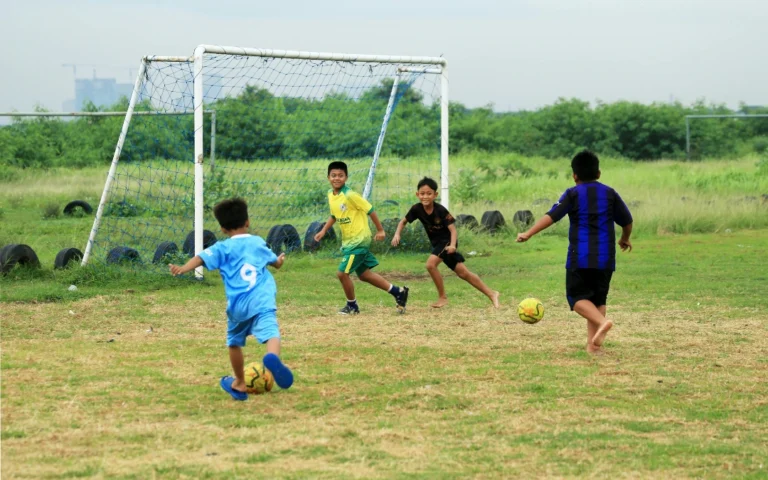
They were active, moving around, playing outdoors.
For many years, that assumption was correct.
What has changed today is not children it is how and how long they are using their hands
What Has Changed in the Way Children Use Screens
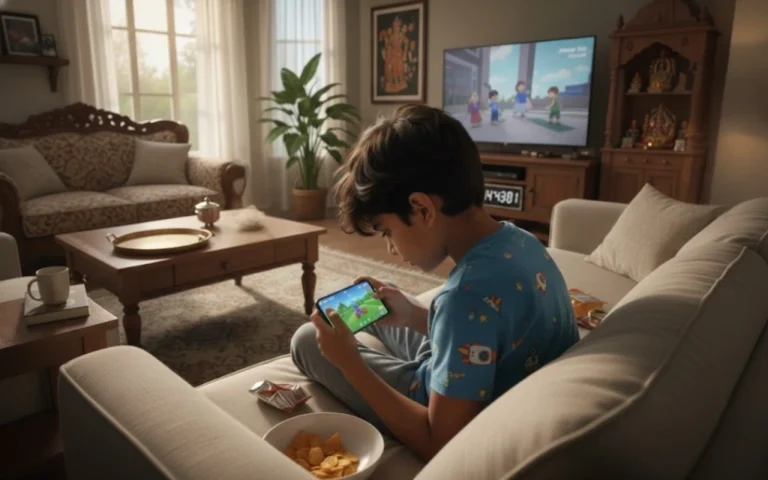
Children today are not just watching screens.
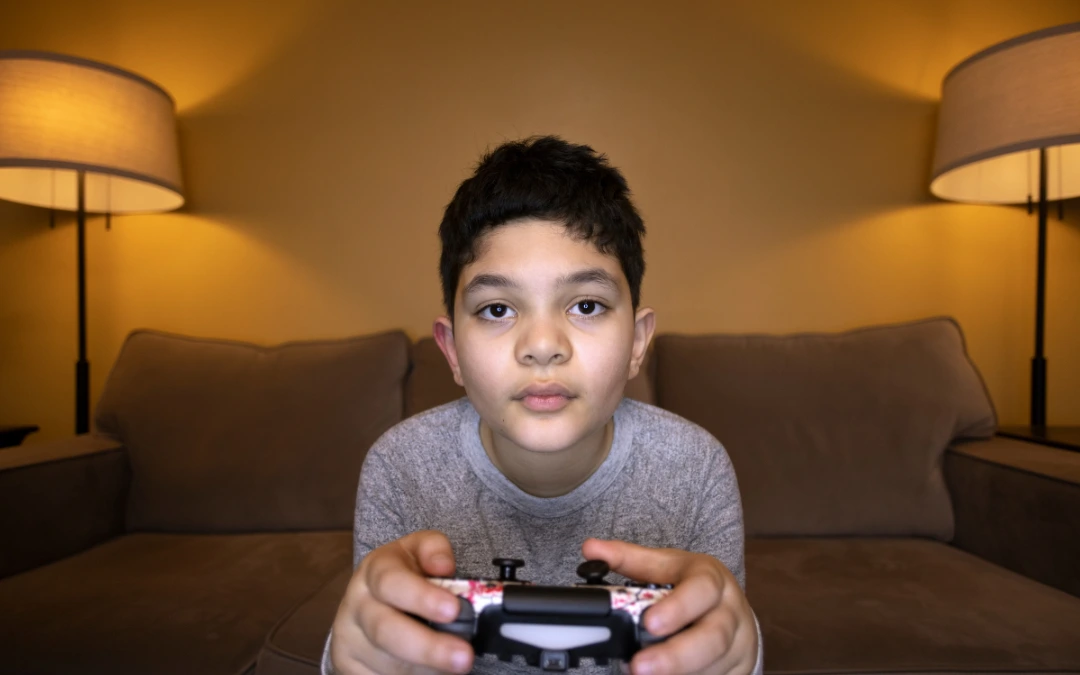
They are holding mobile phones tightly, using thumbs and fingers repeatedly, keeping wrists in the same position for long periods, and playing games continuously, often without breaks.
This pattern is especially common with gaming.
Let me be very clear here.
The problem is not the game itself.
The issue is the prolonged, repetitive physical input required during gaming, particularly when it happens for long, uninterrupted periods.
That physical pattern matters
Why Gaming Needs Special Attention (It’s Not the Game Itself)
Gaming is very different from passive screen use like watching videos.
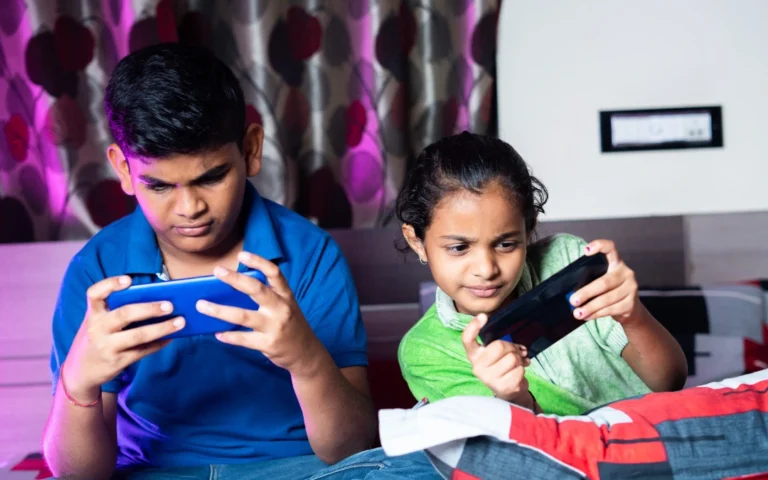
When a child is gaming, fingers and thumbs move constantly, the grip on the device or controller is sustained, wrist posture remains fixed, and the child is deeply engaged and doesn’t feel fatigue early.
From an orthopaedic point of view, this combination is called overuse.
It is the same pattern we see in adults who develop repetitive strain problems at work.
The key difference is simple.
Children don’t complain early
Children Adapt Early — That’s Why Parents Miss the Signs
Children are excellent at adapting.
If their fingers feel tired, they adjust. If their wrist feels uncomfortable, they change position. They keep playing.
They don’t come and say,
“My fingers feel fatigued,” or
“My wrist feels strained.”
By the time pain becomes obvious, the strain has already been repeating for a long time. That is why many parents miss the early signs
What Medical Research Says About Screen Use and Hand Strain in Children
This is not just clinical observation.
There is medical research that supports this pattern.
A peer-reviewed study published in Frontiers in Public Health examined electronic device use in children and adolescents and the musculoskeletal symptoms associated with it.
You can read the study here: https://pmc.ncbi.nlm.nih.gov/articles/PMC10338872/
What the researchers found was quite telling.
Around 40–50% of children and adolescents reported some form of musculoskeletal discomfort associated with prolonged electronic device use
What Kind of Hand and Wrist Symptoms Are Seen in Children
The symptoms reported were not serious injuries.
They were early warning signs, such as finger fatigue, thumb discomfort, and wrist pain or stiffness.
These were reported symptoms, not diagnosed diseases and that is important.
Early symptoms are exactly what we should pay attention to
“Doctor, These Are Small Things”
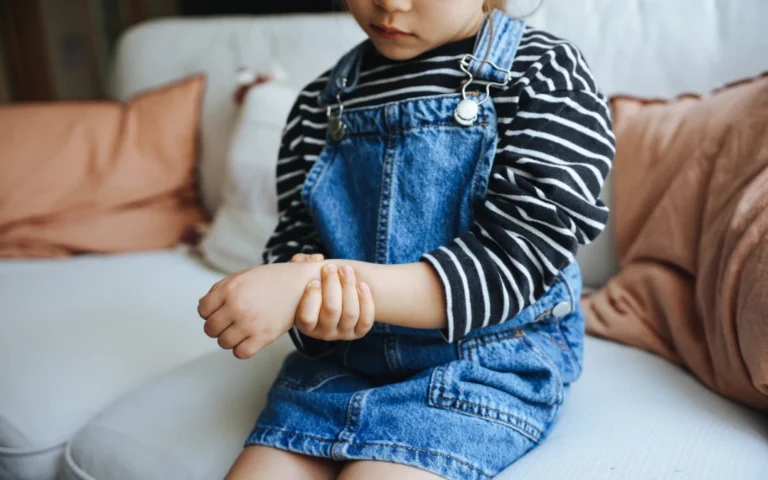
Yes, they are small things.
But in orthopaedics, most long-term problems start as small, repeated strains.
Other studies also show similar associations.
A study on smartphone use duration and wrist and finger pain showed higher symptoms with longer usage:
https://pmc.ncbi.nlm.nih.gov/articles/PMC11265474/
Another study on thumb and wrist pain among smartphone users reported similar findings:
https://www.cureus.com/articles/225029-prevalence-of-thumb-and-wrist-pain-among-smartphone-users-in-the-saudi-arabian-general-population-a-cross-sectional-study
You don’t need to read all of these in detail.
They are shared here simply to show that this is well observed, not speculation
Why Small, Repeated Strain Matters as Children Grow
As an orthopaedic surgeon, my concern is not just today’s discomfort.
My concern is what repeated strain during growing years can influence over time.
During childhood and adolescence, tendons are adapting, joints are developing tolerance, and muscle coordination patterns are being set.
Repeated, unregulated strain during these years can reduce tolerance to repetitive activity later, increase susceptibility to overuse symptoms in adulthood, and contribute to earlier onset of hand or wrist problems during work life.
This does not mean your child will definitely have problems later.
It means early habits influence future resilience
This Is Not About Banning Mobile Phones or Games
Let me be very clear.
This is not about banning mobile phones, gaming, or technology.
That is neither practical nor necessary.
The issue is continuous, unregulated use without breaks.
Just like adults are advised to take breaks from computer work, children need the same sensible approach
Early Signs Parents Can Easily Watch For at Home
You don’t need medical training to notice early signs. Just observe.
You may notice your child shaking their hands after gaming, complaining of tired fingers, feeling wrist discomfort after long sessions, or avoiding writing or gripping activities.
These signs do not require you to panic, but it needs your attention.
Simple Changes That Can Protect a Child’s Hands
Small changes make a big difference, and most of us know it. But we often ignore or forget to persuade children to to
1. Encourage regular breaks during gaming.
2. Avoid very long, uninterrupted sessions.
3. Mix screen time with physical activity.
4. Take hand fatigue complaints seriously.
Children will not regulate this on their own. As parents, we need to step in gently.
For many years, hand and wrist overuse problems were considered adult issues.
What has changed is not children it is how and how long their hands are being used.
So just be aware Catching small things early protects your childs long term health
Medical References and Further Reading
Excessive electronic device use and musculoskeletal symptoms in children and adolescents
https://pmc.ncbi.nlm.nih.gov/articles/PMC10338872/Smartphone use duration and posture effects on wrist and finger pain
https://pmc.ncbi.nlm.nih.gov/articles/PMC11265474/Prevalence of thumb and wrist pain among smartphone users
https://www.cureus.com/articles/225029-prevalence-of-thumb-and-wrist-pain-among-smartphone-users-in-the-saudi-arabian-general-population-a-cross-sectional-study
About Author

Dr. Abhiram T V
Dr. Abhiram T V is an Orthopaedic Surgeon currently associated with Byramjee Jeejeebhoy (B.J.) Medical College & Sassoon General Hospital, Pune.
He completed his MS in Orthopaedics from Grant Government Medical College & Sir J.J. Group of Hospitals, Mumbai, a premier tertiary care institution in India.
Dr. Abhiram’s clinical work focuses on trauma surgery and comprehensive musculoskeletal care, with an emphasis on safe, evidence-based decision-making and long-term patient outcomes.